What Makes a Balinese Wood Carving Truly Authentic
Bali has long been known for its rich artistic traditions, and among them, wood carving holds a special place. From intricate temple ornaments to expressive figurative sculptures, Balinese wood carving is more than decoration. It is a reflection of culture, patience, and a way of life that has been passed down through generations.
But in today’s world, where demand continues to grow and production becomes faster, an important question often arises. What truly makes a Balinese wood carving authentic?
The answer lies not only in the final piece, but in the process, the intention, and the environment in which it is created.
The Roots of Balinese Wood Carving
Balinese wood carving is deeply connected to the island’s spiritual and cultural identity. Historically, carvings were not made for commercial purposes. They were created for temples, ceremonies, and sacred spaces, often carrying symbolic meanings rooted in Hindu beliefs and local traditions.
Over time, as Bali became more accessible to the world, wood carving evolved. It found its way into homes, galleries, and collections across different countries. While this brought wider appreciation, it also introduced new challenges. The line between traditional craftsmanship and mass production began to blur.
Understanding authenticity starts with understanding where the craft comes from.
The Importance of Process Over Speed
One of the clearest signs of authentic Balinese wood carving is the process itself. Traditional carving is never rushed. It requires time, focus, and a deep understanding of both the material and the form.
The process usually begins with selecting the right type of wood. Each type carries its own character, texture, and strength. Common woods such as suar, crocodile wood, and mahogany are chosen not only for their durability, but also for how they respond to carving.
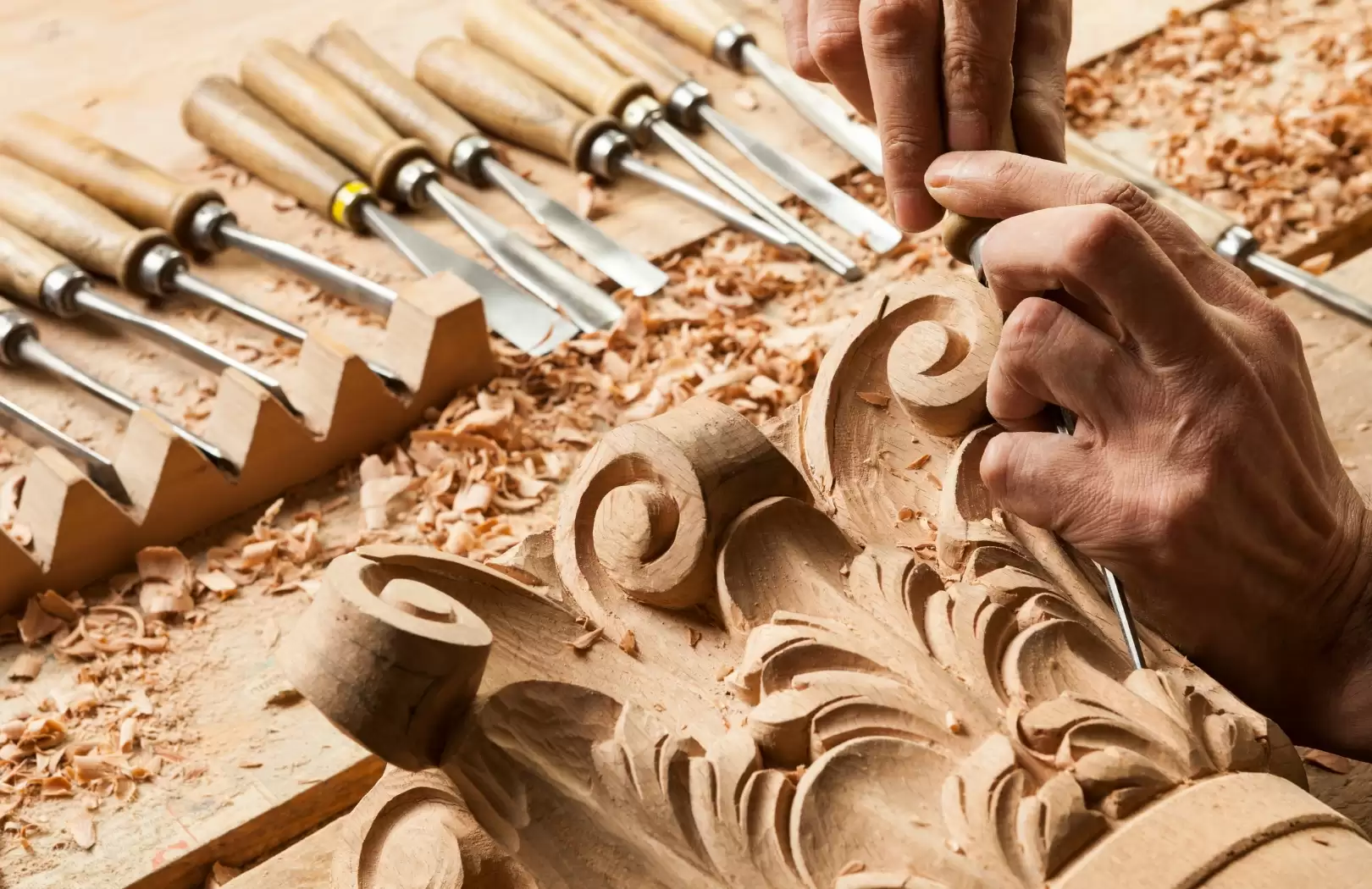
From there, the carving is done entirely by hand using traditional tools. There are no shortcuts in this stage. Each detail is shaped slowly, allowing the form to emerge naturally. Mistakes are not easily corrected, which is why patience becomes essential.
In contrast, mass-produced carvings often rely on faster techniques, sometimes using machines or simplified methods. While they may look similar at a glance, the depth, detail, and energy within the piece are noticeably different.
Authenticity is not just about how something looks. It is about how it is made.
The Hand of the Artisan
Every authentic wood carving carries the signature of the artisan, even if it is not written. The way a curve is shaped, the depth of a detail, or the expression within a figure all reflect the hand that created it.
In Bali, many wood carvers learn their skills from a young age, often within their own family. Knowledge is passed down through observation and practice rather than formal instruction. This creates a strong connection between generations, where each piece becomes part of a continuing story.
Because of this, no two carvings are ever exactly the same. Even when the subject is similar, the interpretation will always differ slightly. This individuality is one of the most valuable aspects of authentic craftsmanship.
It is also what makes each piece feel alive.
Understanding the Meaning Behind the Form
Balinese wood carving is not only about technique. It is also about meaning.
Many carvings are inspired by mythology, nature, and daily life. Figures such as deities, dancers, animals, and protective spirits are commonly seen, each carrying its own symbolism. Even decorative patterns often represent elements of balance, harmony, and connection to the natural world.
An authentic piece is usually created with an understanding of these meanings. The artisan does not simply replicate a form. They interpret it.
This is where depth becomes visible. A carving that carries meaning tends to feel more grounded and expressive, while a purely decorative piece may appear empty despite its detail.
The Environment Where It Is Created
Another important aspect of authenticity is the environment in which the carving is made.
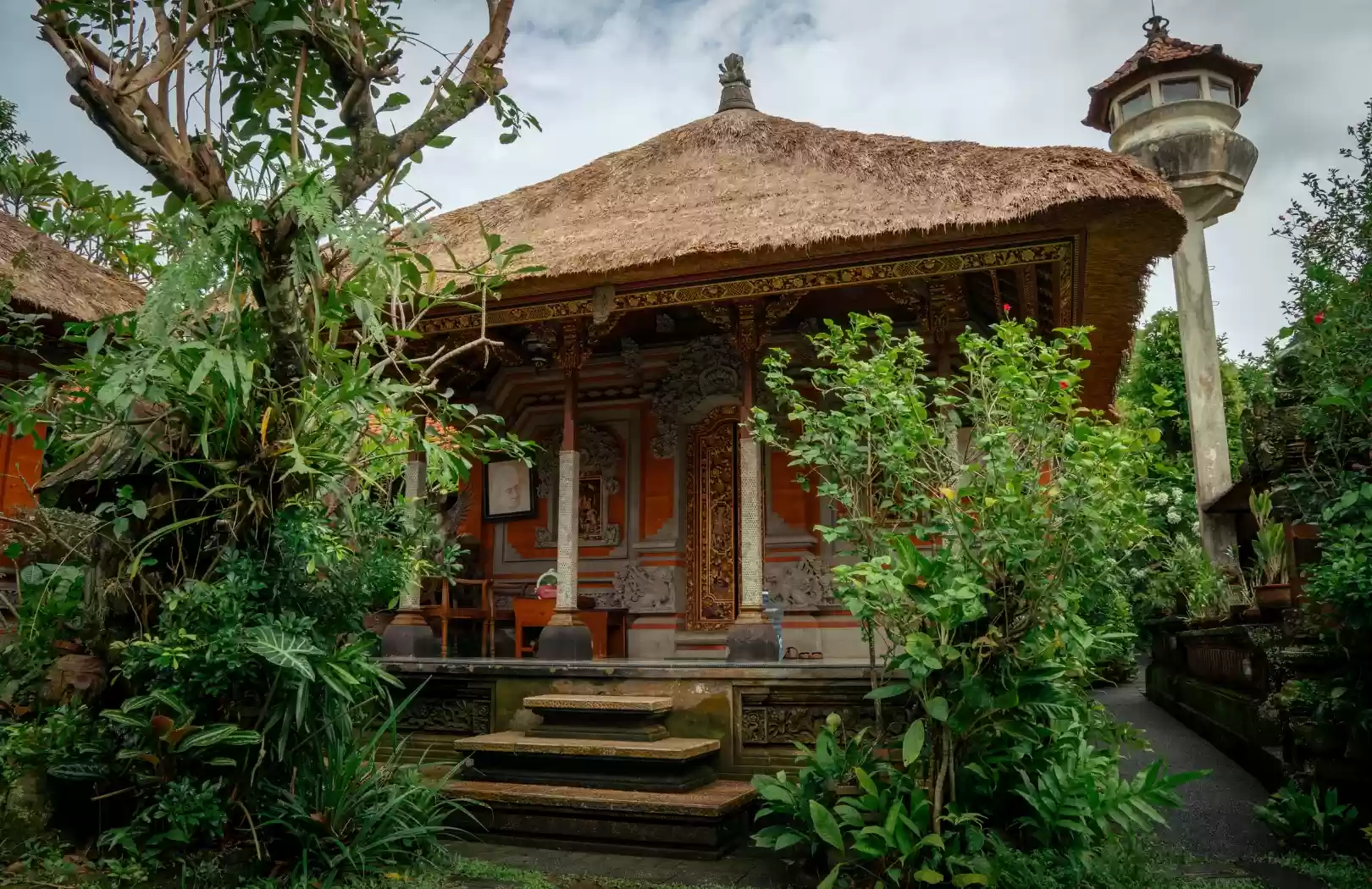
Traditional wood carving in Bali often takes place in a home-based setting, where daily life and artistic practice are closely connected. The workshop is not separated from the living space. It is part of it.
This creates a different kind of atmosphere. The process is not driven by production targets, but by rhythm. The artisan works alongside the flow of daily activities, ceremonies, and responsibilities.
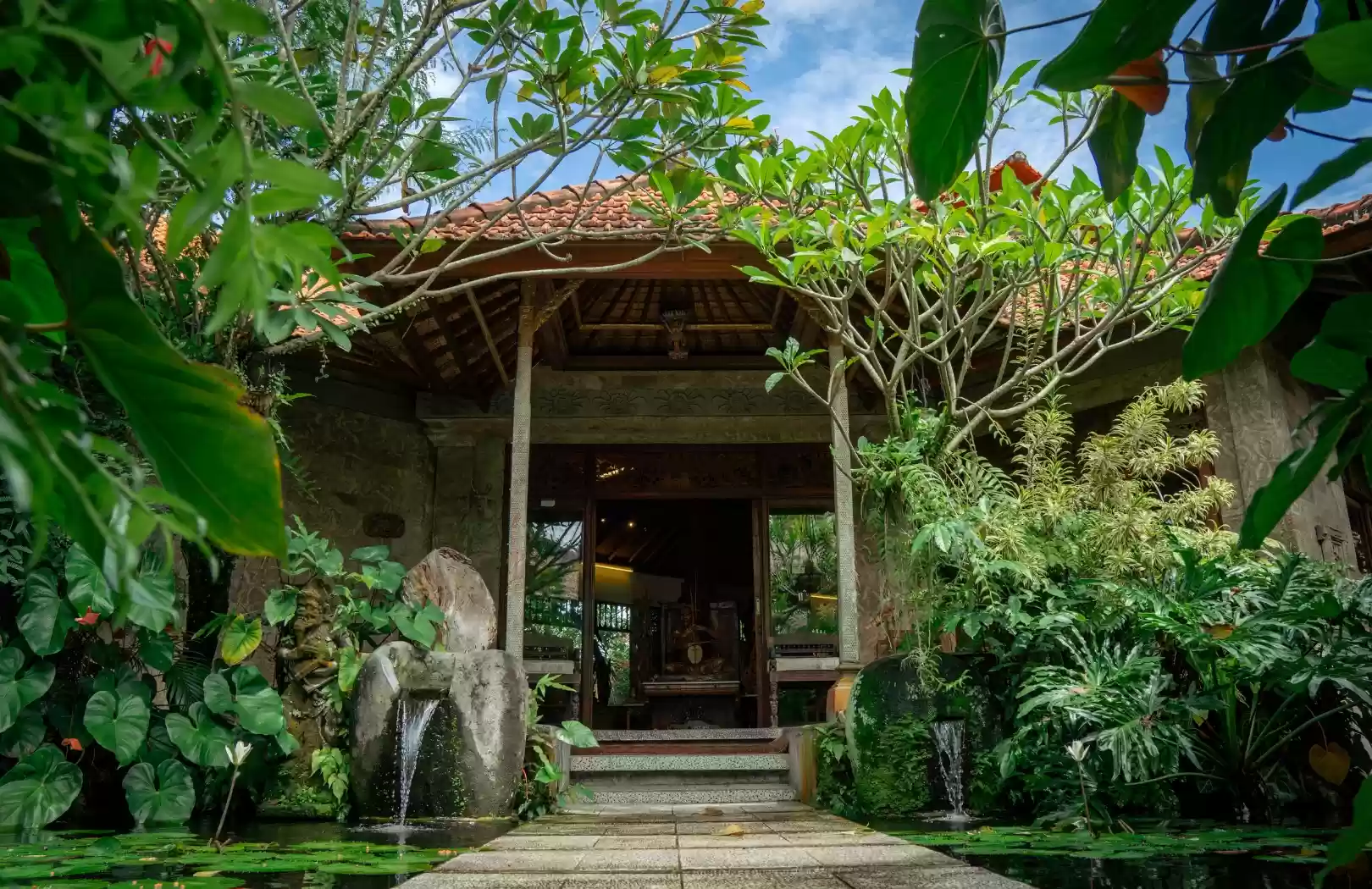
In spaces like Ketut Puja Gallery, this connection can still be felt. The gallery, the wood carving practice, and the traditional Balinese home exist together as one continuous environment. It is not simply a place where artworks are displayed, but where they are lived.
This kind of setting is becoming increasingly rare, yet it plays a significant role in preserving authenticity.
The Difference Between Handmade and Mass Produced
At a glance, it can be difficult to distinguish between handmade and mass-produced wood carvings, especially for those unfamiliar with the craft. However, there are subtle differences that become clearer with closer observation.
Authentic handmade carvings often show slight variations in texture and depth. The details are not perfectly uniform, but they feel more organic. There is a sense of movement and life within the piece.
Mass-produced carvings, on the other hand, tend to look more consistent and repetitive. While this may appear clean, it often lacks the depth and character found in handmade work.
Another key difference is the intention behind the piece. Handmade carvings are created with focus and care, while mass-produced items are often driven by efficiency and quantity.
Recognizing these differences takes time, but it is an important step in appreciating the true value of the craft.
Why Authenticity Still Matters
In a world where almost everything can be replicated quickly, authenticity becomes more meaningful. It represents a connection to something real, something that cannot be replaced by speed or convenience.
Authentic Balinese wood carving carries with it the time, effort, and knowledge of the artisan. It reflects a way of working that values patience over efficiency and depth over volume.
For collectors, designers, and those who simply appreciate art, choosing an authentic piece is not only about owning an object. It is about supporting a tradition and becoming part of its continuation.
Experiencing the Craft Beyond the Object
To truly understand Balinese wood carving, it helps to go beyond simply viewing the finished piece. Seeing the process, observing the tools, and understanding the environment can offer a deeper perspective.
In certain spaces, it is even possible to experience this process more closely. Through small and personal sessions, visitors can learn basic carving techniques and gain insight into how each piece is formed.
These experiences are not about producing a perfect result. They are about understanding the rhythm, the patience, and the mindset behind the craft.
And often, that understanding changes the way the finished work is seen.
A Living Tradition
Balinese wood carving continues to evolve, but its core remains rooted in tradition. It is shaped by the hands of artisans, influenced by their environment, and guided by values that have been carried across generations.
Authenticity, in this context, is not something fixed. It is something that is maintained through practice, respect, and continuity.
Places that continue to uphold these values play an important role in keeping the tradition alive. Not by preserving it in a static form, but by allowing it to be lived every day.
What makes a Balinese wood carving truly authentic cannot be defined by appearance alone. It is found in the process, the intention, the environment, and the hands that shape it.
In a time where speed often takes priority, choosing authenticity becomes a conscious decision. It requires looking beyond the surface and appreciating the story behind each piece.
And in Bali, that story is still being carved, one piece at a time.