Understanding Traditional Balinese Houses and Their Meaning
When people think about Bali, images of temples, rice terraces, and tropical landscapes often come to mind. But one of the most meaningful aspects of Balinese culture is found closer to home, quite literally.
The traditional Balinese house is not just a place to live. It is a reflection of philosophy, spirituality, and the relationship between humans, nature, and the divine. Every structure, every direction, and every open space carries meaning.
To truly understand Bali, it helps to understand how its homes are designed.
More Than Just a House
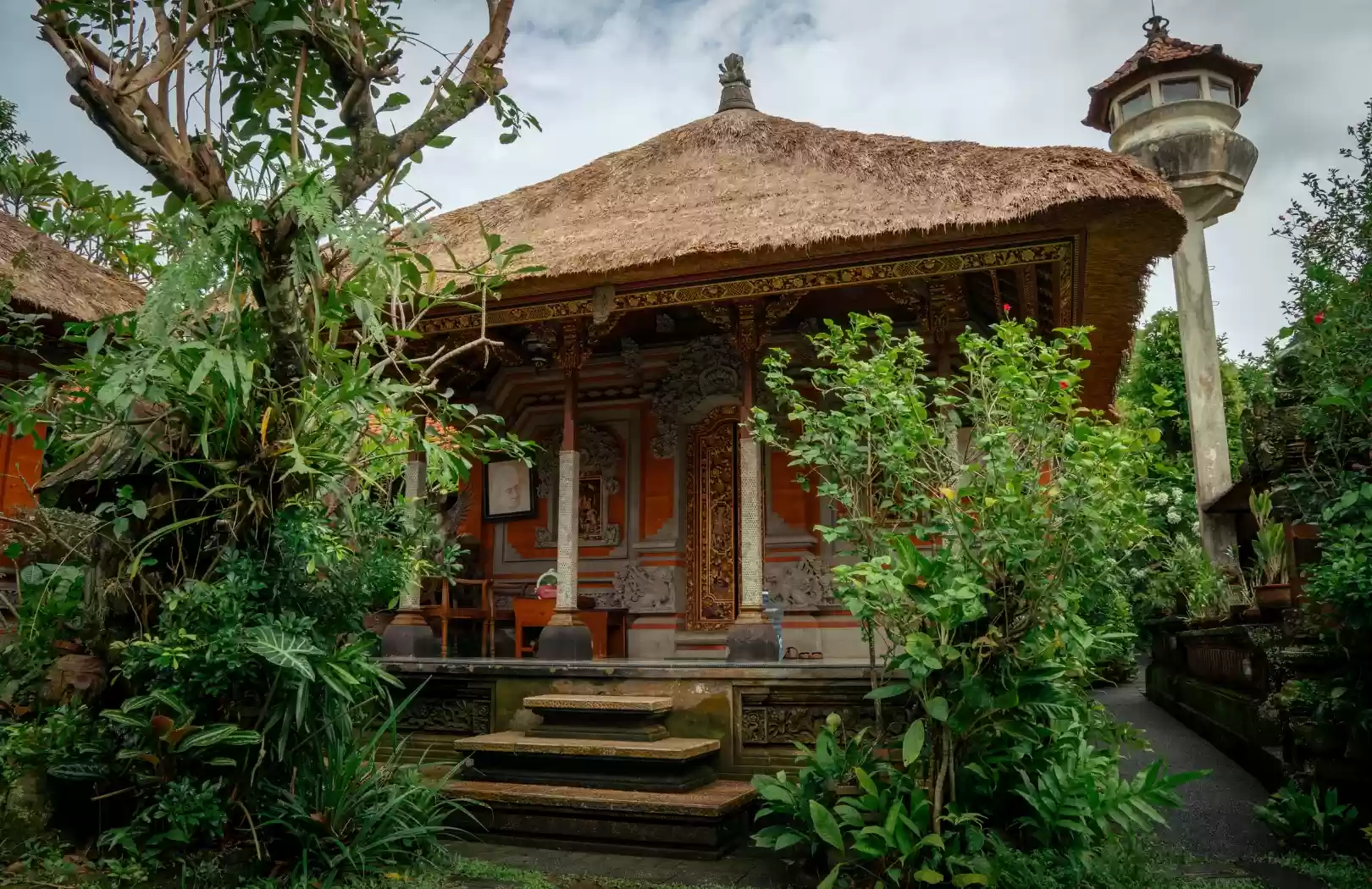
A traditional Balinese house is not a single building. It is a compound made up of several separate structures, each with its own function. These structures are arranged within a walled area, forming a balanced and harmonious environment.
This layout is not random. It follows a system of spatial organization based on Balinese Hindu philosophy. The concept of balance is central, often described through the relationship between different forces such as sacred and mundane, mountain and sea, or spiritual and physical.
The house becomes a small representation of the universe.
The Concept of Orientation
One of the key principles in traditional Balinese architecture is orientation. The direction of each structure is carefully considered, based on what is known as “kaja” and “kelod.”
“Kaja” refers to the direction towards the mountains, which are considered sacred. “Kelod” refers to the direction towards the sea, which is associated with more worldly or less pure elements.
Structures that are used for prayer or spiritual activities are typically placed closer to the kaja side, while more everyday functions are positioned towards the kelod side. This creates a natural hierarchy within the compound.
Understanding this orientation helps explain why Balinese homes feel so intentional in their layout.
The Role of the Family Temple
At the heart of many traditional Balinese homes is a small family temple, known as “sanggah” or “merajan.” This is where daily offerings and prayers take place.
The presence of the temple highlights the importance of spirituality in daily life. It is not something separate or occasional. It is integrated into the rhythm of the household.
Each day, offerings are made as a form of gratitude and balance. These rituals, although simple, play a significant role in maintaining harmony within the home.
Open Spaces and Natural Flow
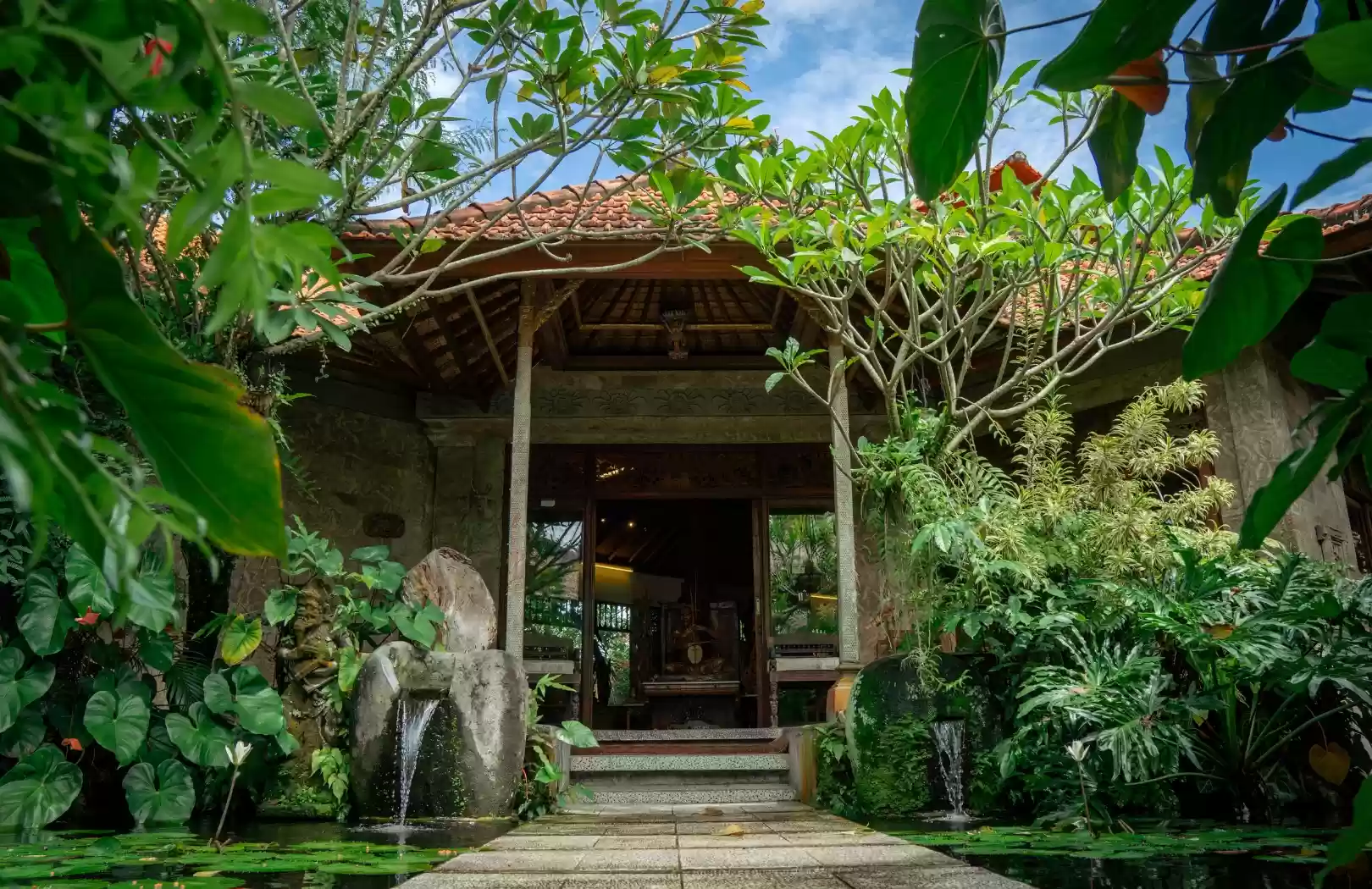
Unlike modern houses that are often enclosed, traditional Balinese homes are designed with openness in mind. The spaces between buildings are just as important as the buildings themselves.
Central courtyards allow for natural light, air circulation, and movement. This creates a sense of flow, where the boundaries between indoor and outdoor spaces are less defined.
The openness also reflects a connection to nature. Plants, trees, and natural elements are often integrated into the compound, reinforcing the idea that the home is part of a larger environment.
This design not only supports comfort in a tropical climate, but also aligns with cultural values of balance and harmony.
Materials and Craftsmanship
Traditional Balinese houses are built using natural materials such as wood, stone, and thatch. These materials are chosen for their availability, durability, and connection to the environment.
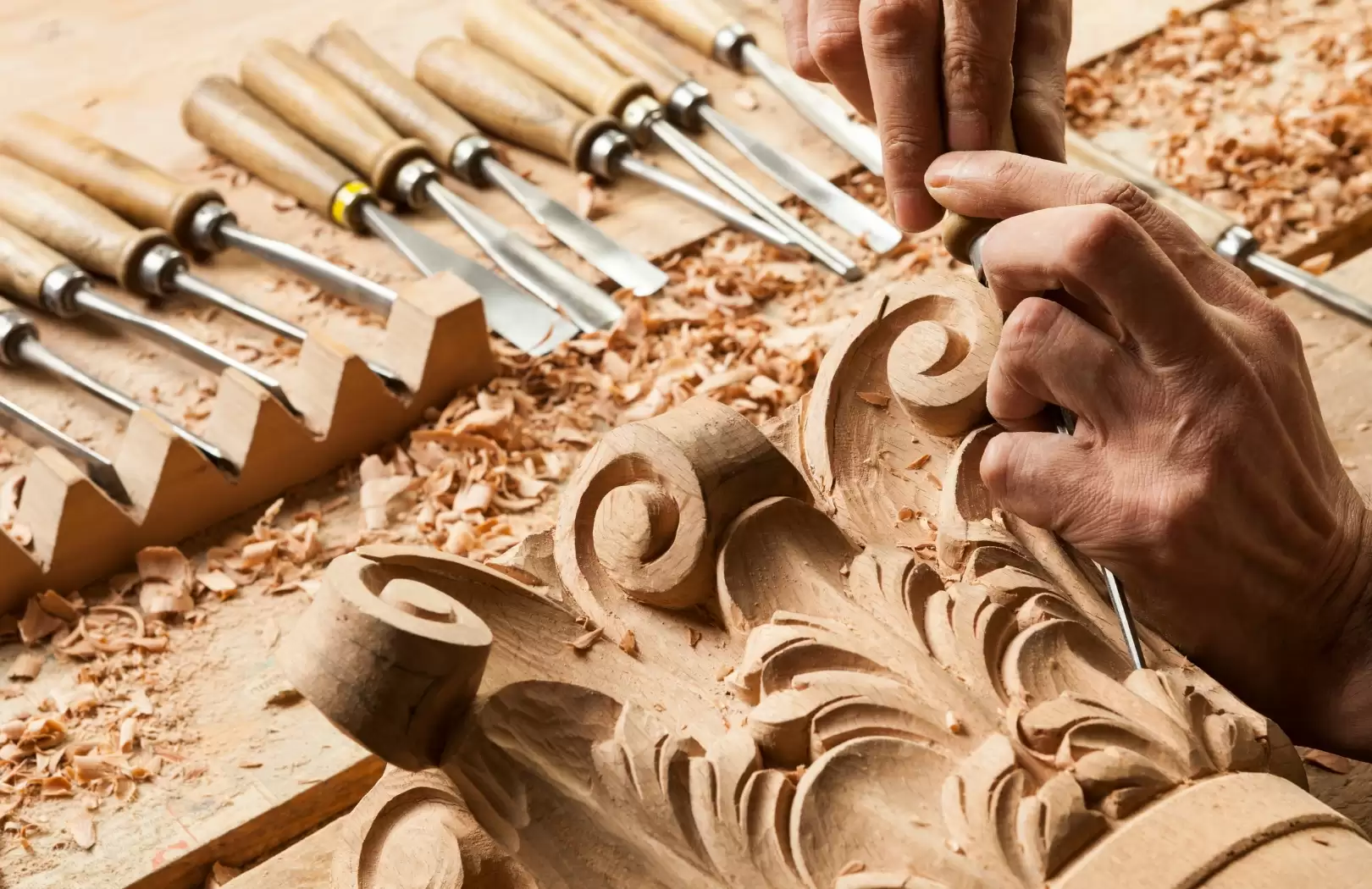
Wood plays a particularly important role, especially in structural elements and decorative carvings. Doors, pillars, and panels are often intricately carved, adding both aesthetic and symbolic value to the space.
The craftsmanship involved in these details reflects the same principles found in Balinese wood carving as an art form. It requires patience, skill, and a deep understanding of the material.
Each element is created with care, contributing to the overall character of the home.
A Living Space, Not a Static Design
One of the most important aspects of a traditional Balinese house is that it is a living space. It evolves with the family, adapting to changes over time while maintaining its core principles.
New structures may be added, existing ones may be modified, but the underlying philosophy remains. The balance between different elements is preserved.
This flexibility allows the home to remain relevant across generations, without losing its identity.
Daily Life Within the Compound
Life in a traditional Balinese house follows a rhythm that is closely tied to cultural practices and community activities.
Mornings often begin with offerings and simple rituals. Throughout the day, the spaces within the compound are used for various activities, from cooking and working to resting and socializing.
Ceremonies and gatherings also take place within the home, bringing family members together. These events reinforce the importance of connection, both within the household and with the wider community.
The house is not just a backdrop for daily life. It is an active participant in it.
The Relationship Between House and Craft
In some traditional settings, the house is not only a place to live, but also a place to create.
Artisans often work within their home compounds, integrating their craft into daily life. This creates a seamless connection between living and making.
At Ketut Puja Gallery, this relationship can still be experienced. The traditional Balinese house exists alongside a working wood carving practice and a curated gallery space. The boundaries between these elements are not clearly separated.
This allows visitors to see how art is not isolated, but part of a continuous process that is rooted in the environment.
Why This Tradition Still Matters
As Bali continues to develop, modern housing styles have become more common. While these offer convenience, they often move away from the principles that define traditional architecture.
Understanding traditional Balinese houses helps preserve a deeper appreciation for cultural heritage. It highlights values that go beyond functionality, such as balance, respect, and connection.
These principles remain relevant, even in a changing world.
They remind us that a home can be more than a structure. It can be a reflection of how we live, what we value, and how we relate to our surroundings.
Experiencing It Firsthand
Reading about traditional Balinese houses provides an introduction, but experiencing one in person offers a different level of understanding.
Walking through the compound, observing the layout, and feeling the atmosphere can reveal details that are difficult to capture in words. The way light enters a space, the texture of materials, and the quiet presence of daily rituals all contribute to the experience.
In places where these traditions are still maintained, visitors have the opportunity to engage with them more directly. Not as spectators, but as participants in a living environment.
A traditional Balinese house is more than a place to live. It is a reflection of a worldview that values balance, harmony, and connection.
From its layout and orientation to its materials and daily use, every aspect carries meaning. It is a space where culture is not displayed, but lived.
In understanding these homes, we gain a deeper insight into Bali itself. Not just as a destination, but as a place shaped by traditions that continue to guide everyday life.
And in the quiet spaces where these traditions are still preserved, that understanding becomes even more meaningful.